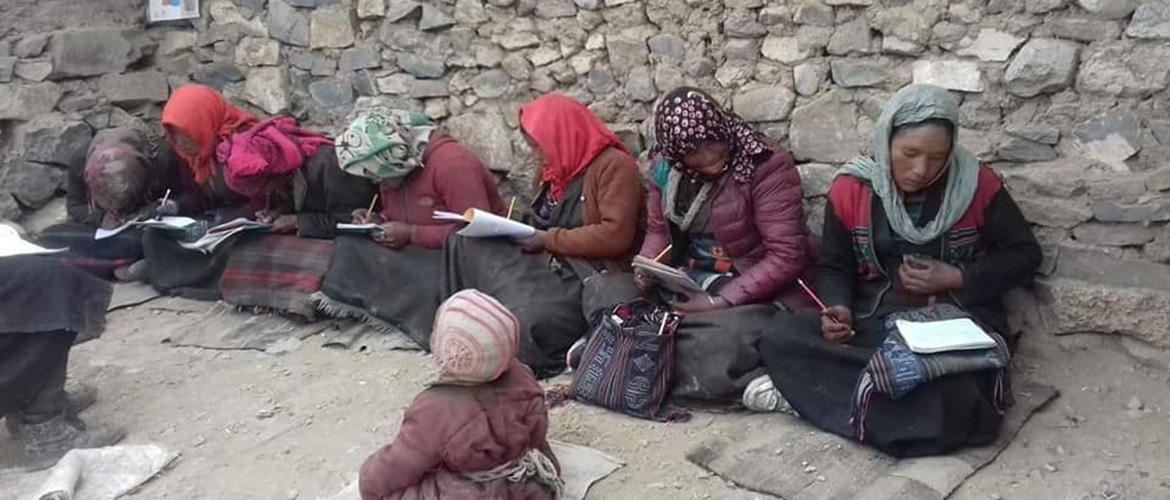
photo credit – Help Dolpo
Adult Literacy Classes
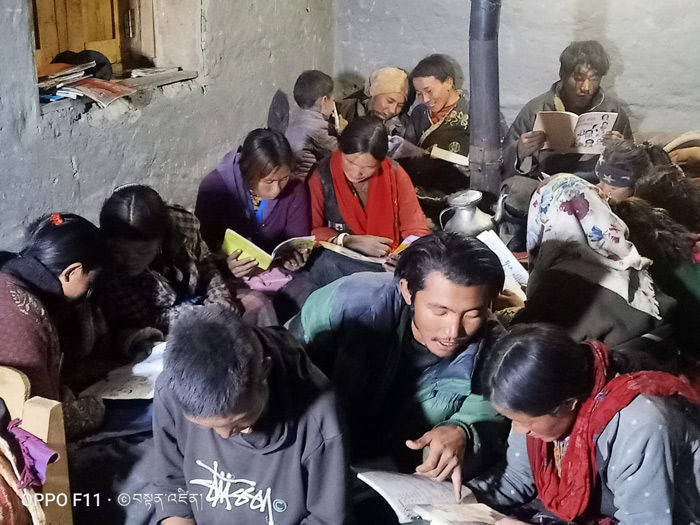
Adult literacy class at Tiling school
image credit – Yonten Gyatso – former coordinator, Tiling School
For most adults in Upper Dolpo, the opportunity to attend school simply did not exist. The region’s first school was not built until 1999, and a second followed four years later—both made possible through the initiative and generosity of visiting trekkers.
Today, all of the schools we support offer adult literacy classes in the evenings and during the winter months, giving adults and older children the chance to learn to read, write and develop basic numeracy skills.
Most villagers speak a local Tibetan dialect that is not widely used outside Upper Dolpo, so learning Nepali—the national language—can open important doors. Literacy and numeracy make everyday tasks easier, help people navigate life beyond their villages, and create new possibilities for themselves and their families.
These classes offer something they never had as children: the chance to learn.
Most of the adults attending literacy classes are women. In Upper Dolpo, women carry an enormous share of the work that sustains daily life. They labour in the fields, care for livestock, prepare meals, look after children and elders, and keep households running in an environment where every task is physically demanding.
Many women deeply value education and would like the chance to study, but their labour is essential to their families’ survival, taking time away to attend school can quite literally mean a family goes hungry.
The stories below introduce three women whose lives reflect that reality. None had the opportunity to attend school as children. Lhakpa and Karma have taken part in winter literacy classes, while Tsering has not been able to attend. Their stories offer a glimpse into both the determination of women in Upper Dolpo and the obstacles that can stand between a woman and the education she wants.
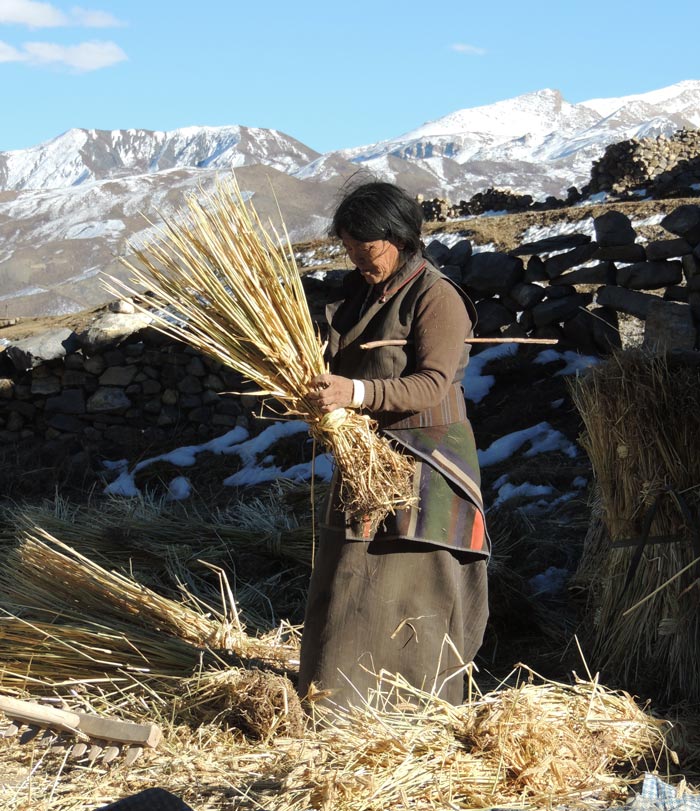
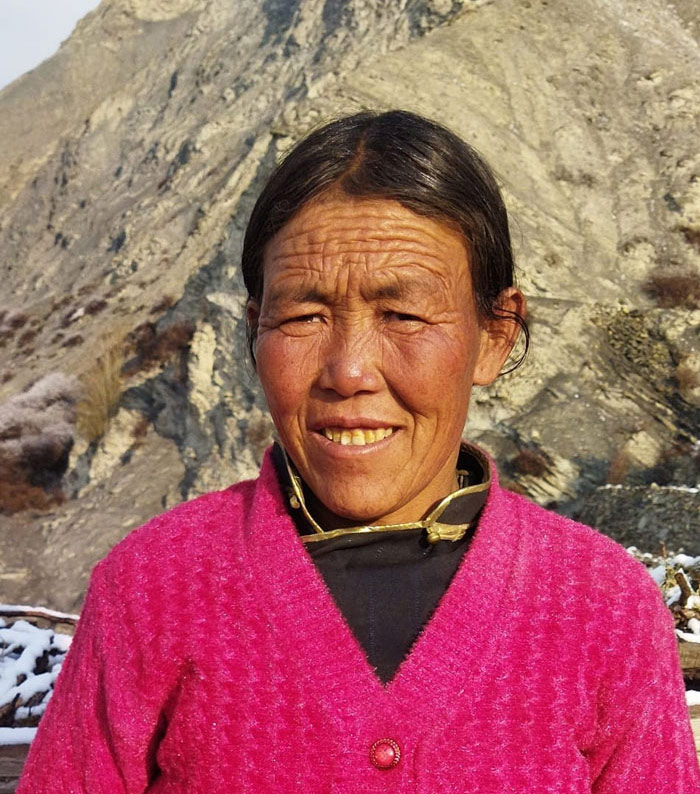
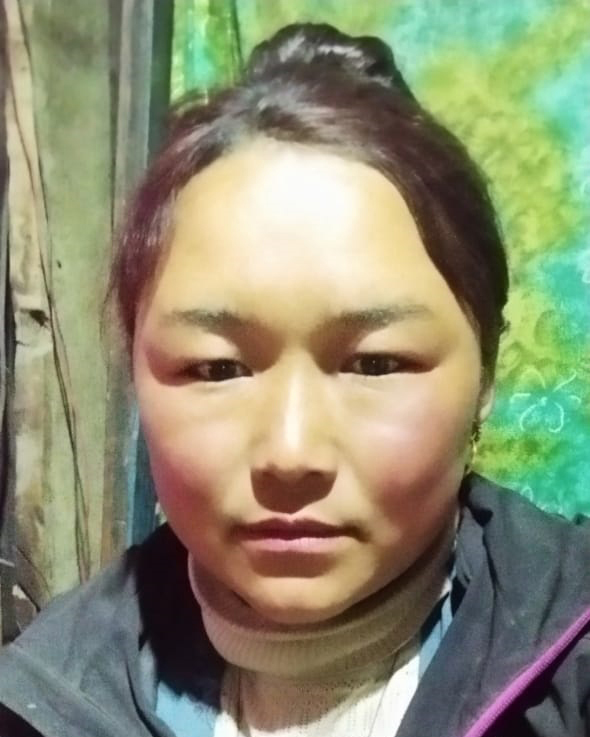
Tsering, age 54
“I am 47 and I have 5 kids. In the beginning I sent my eldest daughter to Karang School but I couldn’t continue because I had no one to help me in the fields.
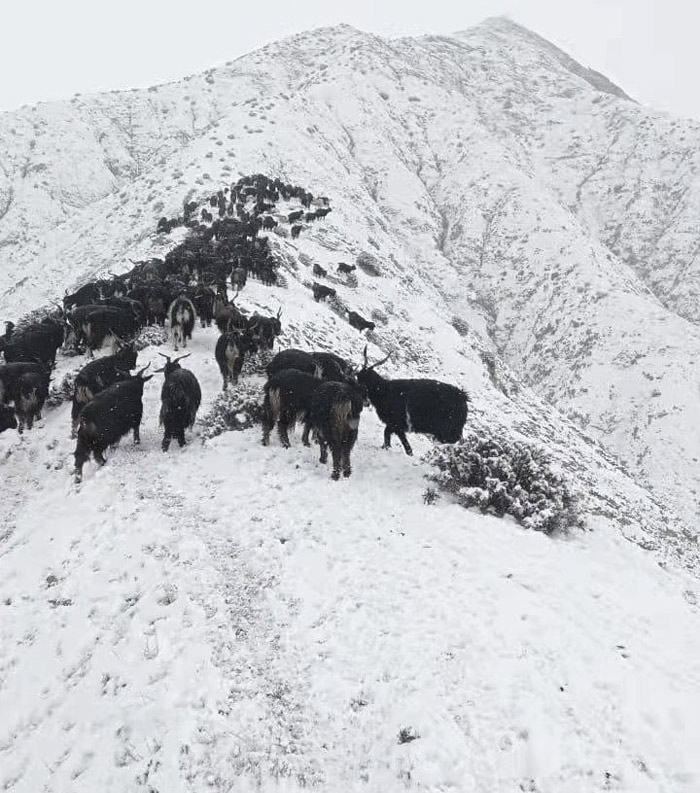
Life is hard. We work days and night in fields, rear goats and sheep and horses and yaks in the mountains in rain and snow. Farmers never finish their work and so many mothers must send kids to help rear animals instead of to school.
I know I am unusual here to send so many kids to school. What inspired me to do this is when I went to city areas I could not recognize numbers written on Nepali notes. The only way to recognize these notes are remembering unique images printed on them. I have to ask for a help for any money related works. This is worst experience and I did not want it for my children.
I managed to send two boys to monastery in Kathmandu to study. I sent another to school and now he studies at grade 12 with help of donors.
My middle daughter studies at grade 9 at Karang hostel in Kathmandu. A boy with no parents, who I raised from a very small age like my own child, I sent him to Kathmandu at the end of 2021 and now he studies at grade 7. My youngest daughter is 9 and she is starting grade 1 this year at Karang School.
Life is hard though without their help. I am getting older day by day. We work days and night in fields and there is no change I see at the end, only we become weaker and weaker.
But I have no choice other than letting them to continue study. I can’t expect them to provide me a better life but it’s my last chance to give my best, and as a mom to sacrifice whatever I can to make them happier, live a better life than I do, and be able to make their own choice in life, know how to read, speak and write. That is my biggest dream for them.
I have not attended adult classes. I don’t think I can learn well. I have to rear animals every day in the mountain. Farmers never finish their work.”
Lhakpa, age 24
“I have been taking winter adult literacy class at Karang School for two years. I am still nervous talking about it. Girls are considered to work at home and help household work from a very small age. I never thought that going to school was important. I have to focus more in field, cattle, and household work.
But I was embarrassed that I couldn’t communicate in Nepali language with people from outside of Upper Dolpo. I decided to attend winter classes when we didn’t have to look after field. Parents thought it was a huge risk but I regret a lot not attending school and parents never thought this was going to be very important step in my life.
Now I can read and understand words written on boards above shops, vehicle, school name, and use mobile to make call and sometimes write messages. I can’t understand all but very basic words used every day. I can write my name, age, and family member’s name. I am so happy to be able to make my own signature. I write a letter to my friends in Nepali.
I never thought this would happen in my life. Thank you!”
Karma, age 14
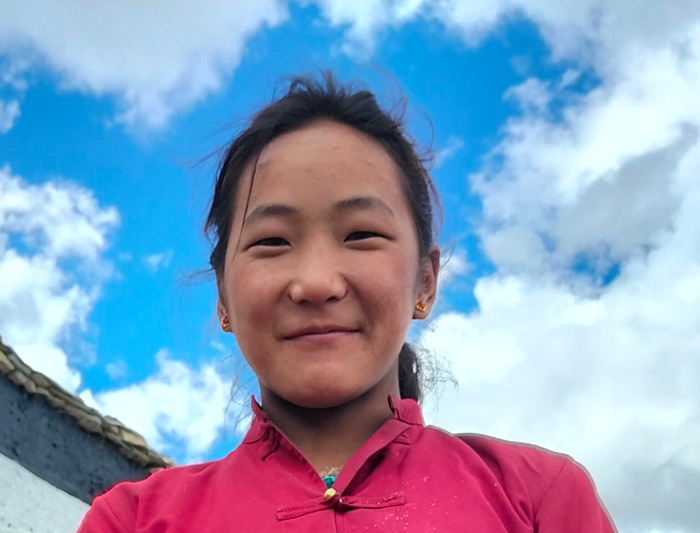
Karma is 14. She is an incredibly determined student. She attended Tiling School through 3rd grade but could not continue because she had to help her parents with fieldwork, livestock care and collecting dung. She did not want to abandon her education so she started attending winter classes. Last summer she was finally able to attend grade 5 at Karang School. This winter she again attended the winter class in Tiling. Her dream is to complete grade 6 in Karang School, then continue her education in Kathmandu.
Her parents are separated. They both support her education. She lives with her mom. She has a younger brother who is a monk in India. Karma is good in math and Tibetan and dancing. She loves to teach others to dance.
It always seems impossible, until it’s done.
– Nelson Mandela.